
By Marc Estes
There are moments in history when God’s activity becomes unmistakable, not because the world is suddenly righteous, but because people are suddenly hungry. I believe we’re living in one of those moments right now. We’re standing on the crest of a modern awakening, and it’s unfolding in plain sight. The tragedy would not be that the moment passed, it would be that the church didn’t see it. This isn’t hype. It’s measurable.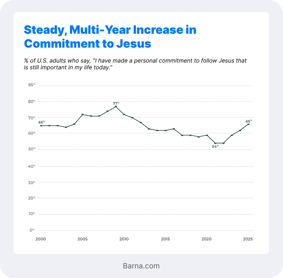
Recent research shows 66% of U.S. adults say they’ve made a personal commitment to Jesus that is still important in their lives—a 12-point jump since 2021. Even more striking, Gen Z men saw a 15-point increase in commitment to Jesus between 2019 and 2025.1There hasn’t been this kind of widespread openness since the era of the Jesus People Movement. And yet… many churches are not experiencing a corresponding breakthrough.
That tension matters. Because it’s possible to be living in a “wide-open” moment culturally and still miss it missionally. Jesus warned Jerusalem that they didn’t recognize what God was doing “in their day.” The church must not repeat that mistake today.
The uncomfortable truth: evangelism isn’t automatically happening
Here’s one reason I’m convinced the church must get serious (and practical) about evangelism health:
- Research suggests 70–85% of churches are plateaued or declining.
- The average conversion ratio among U.S. churches is 85:1 (meaning it takes about 85 people in attendance to see one conversion per year).
- By contrast, “effective evangelistic churches” are often defined around a 20:1 conversion ratio (5%).2
Those numbers aren’t meant to shame anyone. They’re meant to wake us up.
Because evangelism is not a vague idea. It’s a spiritual assignment with real-world outcomes. And outcomes can be measured.
Why “evangelism health” is the metric leaders can’t ignore
If you’re leading anything important, your finances, your physical health, your organization, you measure what matters. Not because you worship numbers. Because
you honor stewardship.
 The church doesn’t exist to grow an audience. We exist to reach people. Real people who are searching for truth, belonging, and hope.
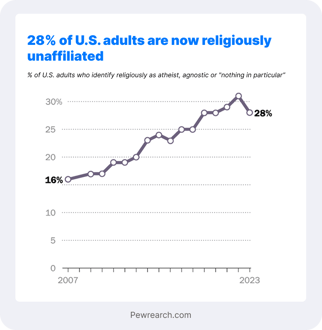
And right now, a massive portion of our nation is living outside of religious affiliation. A major U.S. study found 28% of adults are religiously unaffiliated.3 That’s not a statistic to argue about. That’s a mission field to love.
So here’s the real question: Are we healthy enough, personally and organizationally, to respond to this moment?
The quiet crisis: many Christians feel “open,” but don’t engage
One of the most sobering realities is that many believers care about evangelism, but don’t have consistent habits of engagement.
A Lifeway Research report found that, in the past six months, when it comes to evangelistic steps with a non-Christian stranger:
- 40% have had a conversation about faith
- 39% have shared a story of what God has done in their lives
- 36% have shared a Bible verse or story
- 34% have invited a stranger to church
- 30% have shared how to become a Christian.4
And this line captures what many leaders feel in their bones: “Praying for someone to follow Christ comes more easily than talking with someone about it.”4
If that’s true (and it is), then churches don’t just need more passion. We need more health. More clarity. More training. More intentional rhythms. And much more fruit!
What if you could measure evangelism health starting today?
At VisitorReach, we’ve built two simple tools to help churches assess evangelism health in a way that is practical, non-punitive, and actionable.
The first assessment evaluates your church’s outreach efforts and how effectively you’re reaching unchurched people in a holistic way. It helps you identify where you’ve invested wisely—and where greater focus or resources could make a bigger impact. The second assessment turns the focus inward. Evangelistic leaders build evangelistic churches, and this tool helps you uncover personal growth areas you may not have considered, so you can become even more effective at reaching people.
The purpose of these assessments are not to create pressure but to create progress. These tools are designed to help you identify where you’re strong, where you’re drifting, and what adjustments will help you step into this moment with faith and focus.
The Church Reach Assessment
The Church Reach Assessment evaluates your church’s overall health in evangelism across six key areas:
- Salvations
- Digital
- Services
- Training
- Finances
- Ministries
This matters because evangelism is not just a “sermon moment.” It’s an ecosystem.
Your services can be spiritually powerful but confusing to seekers.
Your people can be warm but untrained.
Your digital presence can be invisible in your own city.
Your ministries can be active but disconnected from mission.
The Church Reach Assessment helps you see the whole picture—so you can align what you do with who you’re called to reach.
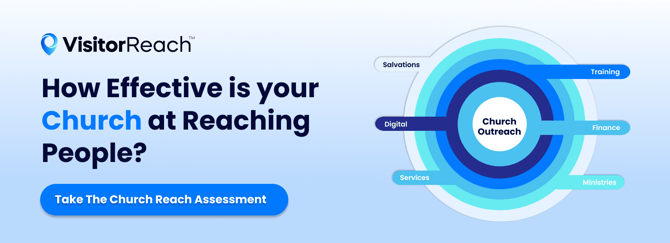
This tool will help every church to identify where their strengths and weaknesses lie when it comes to their evangelism focus and assist them in unlocking resources that will help them to break the growth barriers that may have hindered them for a long time. Take the Church Assessment now.
Don’t fear the results. Embrace the opportunity
If there are blind spots, now is a beautiful time to uncover them, while spiritual openness is rising and people are searching. Because the cost of avoiding reality is not just organizational stagnation. It’s missing people.
The goal isn’t perfection—it’s faithfulness.
When we can see what’s working—and what isn’t—we’re better equipped to respond with wisdom. The Holy Spirit is inviting the church right now to wake up and step forward with courage—ready to meet people where they are and lead them toward hope.
Not to chase a trend, but to meet a moment.
Start Your Assessment Today!
Take five minutes to answer questions about your church and receive a free, detailed 7-page report delivered to your email. Then gather your leaders, look at what the data is revealing, choose a few clear adjustments, and move forward on purpose. Take the Church Assessment.
Interested on how you score personally?
The Personal Reach Assessment helps leaders spot strengths, gaps, and next steps for outreach. Learn more about the Personal Reach Assessment.